With Angular JS, it is very important to know well the beginner’s guide for building the web apps. You have generally been heard of the term Backbone.js and Ember.js if you are a professional JavaSript developer. Backbone.js is mainly a JavaScript library with the possession of a RESTful JSON interface whereas Ember.js is particularly an open-source JavaScript framework. One will preferably miss various important features if they are not familiar with the term known as AngularJS yet. These features will probably help in the overall enhancement of your HTML for the web applications. You will find a superheroic taste of the MVW framework of JavaScript or AngularJS with the help of it. So, it is very important to know the overall process of getting started and also to consider its stand-out features. This will help you to choose properly the AngularJS for your upcoming projects. It doesn’t have any such role in developing maintainable as well as well-architectured richweb applications.
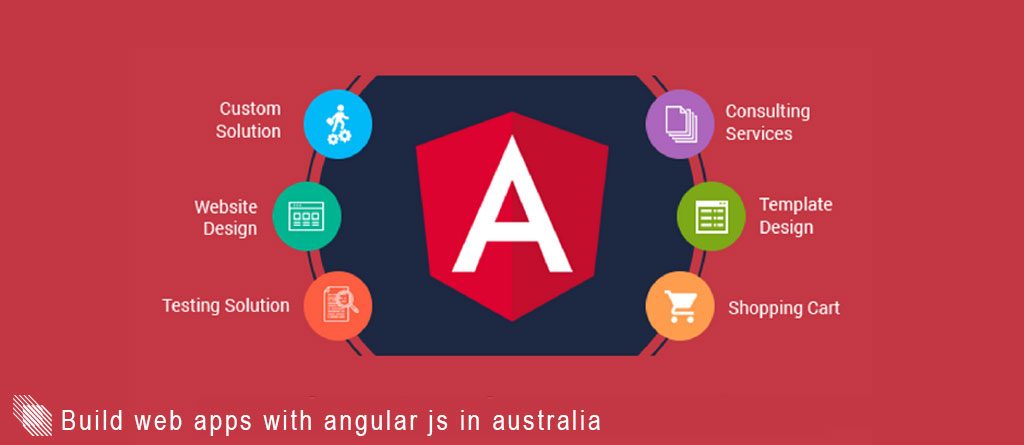
Mainly, AngularJS is an open source web application framework, and also it is built by Google. These are mainly designed for the web developers for making both the testing as well as front-end development easier. To elongate the web applications with the general capability of Model-view-controller (MVC) is mainly considered as the major goal of AngularJS. So, mainly it is a fully extensible client-side JavaScript MVVM or MVC framework. It works great with many other libraries, and so it runs without any library dependencies. Sometimes, it is very important to hire angularjs developer. For fitting your specific needs, you can easily replace its each and every feature and also modify it.
It was Miško Heverym and Adam Abrons (Google engineers of that time) who were mainly involved in developing AngularJS in the year 2009. It is also mentioned on its official website that basically it is a structural framework for the dynamics of web apps. So, it is best fitted for the effective creation of the one-page web applications that mainly require HTML, CSS, and JavaScript on the client side.
It plays a great role in letting you expanding the syntax of HTML and additionally, it also allows you to make the proper use of HTML as your template language. This helps to express the major components of web application both concisely as well as neatly. AngularJS generally makes it very easy to test and also helps you to structure your JavaScript code and that too in a better way.
How To Use AngularJS?
It is quite an easy way to get started with AngularJS. Generally, by putting a few attributes to your HTML scripts, you will only require five minutes to have a simple Angular app. An angular development company can easily make the proper usage of the AngularJS. There are several steps which include:
First of all, you need to include the “ng-app” directive and that too in the <html> tag. It will probably help to define the page properly as an Angular application and helps to make the AngularJS run effectively on the page.
Then, at the page bottom, you should place Angular <script> tag where the <head> tag ends.
After that, it is very important to add regular HTML. The attributes of HTML are mainly used to access the directives of AngularJS. Whereas, the double bracket notation is very useful for the proper evaluation of expressions.
The namespace here is usually defined by the directive ng-controller, and so, for controlling your data, you can easily place your Angular JS. It is also very effective to evaluate the expressions in your HTML. An Angular repeater object is mainly the ng-repeat directive. So, as long as you have all the important tasks to display, the list elements are asked to be created by Angular.
AngularJS is generally considered as a next generation framework as most of the existing frameworks in the recent days are just a bundle of the present tools. There are some very important features which are much more helpful for the developers. These are also equally helpful for the designers.
Not sure what to use? Don’t worry, just flick us an email at enquiries@masystems.com.au and we will assist you make the best decision! Remember our consultation service is absolutely free.
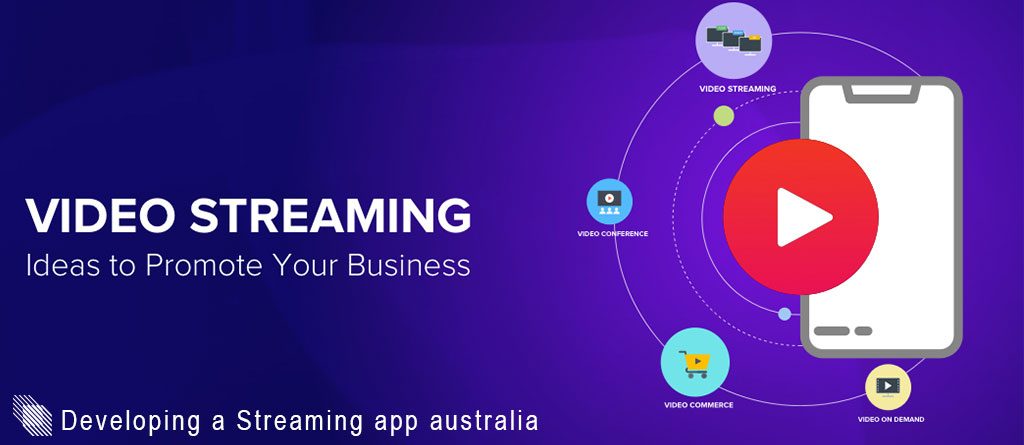
A brief forage through the Internet reveals a few truths about people and what we love – today we’re going to focus on streaming services, specifically, what it takes when developing a streaming app. Streaming services for video like Netflix and Twitch and music streaming platforms like Spotify and Pandora are staples for people around the globe. Because some will seek to build their own platform, it’s important to understand what it takes to accomplish such an ambitious endeavor.
Though delivering video and audio content on-demand has become much easier in the past few years, it’s still wrought with challenges. As many recognize the staggering statistics for the amount of video consumed the world over, providing a unique service for on-demand video or music seems like a lucrative opportunity. Here, we’ll take a look at streaming service facts, using Netflix as an example, then discuss what’s involved in developing a streaming app.
Facts about popular streaming services in today’s market
Today, not having a streaming service subscription or two – or at least access to a friend or family member’s account – is a little… odd. It shouldn’t come as much of a surprise but video streaming services have usurped cable and satellite providers in recent years by quite a long shot.
Leading the way for streaming video services is YouTube followed by Netflix, Hulu, Amazon Prime, then Vimeo which shouldn’t come as much of a surprise. By looking at the number of users, this reveals a few facts that need to be understood before developing a streaming app.
Netflix is perhaps the best example because of its transparency with various figures. As of 2020, per the New York Times, “Netflix has 182.8 million subscribers, making it one of the world’s largest entertainment services.” If you look at the subscription costs and base estimates around their middle tier of service at $12.99, this means that the company should be grossing around $2.37 billion a month in revenue. A look at their financials shows that they made about $6.14 billion in Q2 of 2020 so our estimates aren’t far off.
Digging into Netflix financials
A look at the bottom line requires understanding what the platform needs to exist. Netflix is a video-on-demand service provider that hasn’t delved into live streaming like YouTube Live and other platforms that televise content as it happens. The technology is about the same but live video requires a stronger distribution of CDNs to ensure live streams are broadcast in real-time with as little latency as possible. As such, the main expenses for Netflix (not counting what they spend to finance the production of their original series) are its hosting costs in conjunction with data transfer and licensing.
Netflix uses a slew of different services from AWS for storing and ultimately delivering content on-demand. The video is a little dated as it’s from 2016 but it shows their heavy reliance on various AWS infrastructure, namely EC2 instances for storage, AWS Elastic Load Balancer for optimizing the usage of VMs that run media, and Amazon CloudFront as the CDN for data transfer or streaming over the web.
Because they’re so large, they use a special pricing structure where they pay based on “commitment” which factors in past usage and growth trends. It’s like a pay-as-you-go kind of pricing but structured to deal with “burstable billing” – during peak times, Netflix spools up additional virtual hosts to maximize delivery. This is how they’re able to capably deliver roughly 1 GB of data per hour, per customer for standard definition video and up to 3 GB per hour for HD video.
Main points to consider when developing a streaming app
Taking what we learned from Netflix, we can apply this to unique scenarios for developing a streaming app. Those in the market to deliver content over the Internet, whether video or audio, can expect to use similar architecture to accomplish the same feat.
The cost to build an app
This is a topic we’ve discussed in the past, covering the approximate pricing structures you would expect by either hiring programmers or going with an app development agency. A streaming service is a little different than most projects as the app itself is just a client that links with storage and cloud streaming services that run the video or audio.
Because information is encoded for delivery over a network then decoded at the endpoint (i.e. the app) this does require a little thought. Different compression techniques affect the amount of data transferred over a network as well as the quality of the output. This doesn’t change the development costs but it will affect the next point.
The majority of the work involved in developing a streaming app is cloud hosting, storage, and streaming costs. The app part is actually quite thin as usually, you are best using out-of-the-box video players like JWPlayer to play the content.
The cost for cloud hosting and streaming
This is where 90% of your costs come into play.
A CDN like Amazon CloudFront is needed to capably deliver content to your customers around the world. This is the content delivery portion of AWS that acts as a turnkey solution for transferring data like video or audio streams across the network. This eliminates the need for the immense amount of provisioning and programming required when developing a streaming app from the ground up.
Looking at Amazon CloudFront, you’ll see that they offer three different tiers of service with varying baseline pricing for their standard tier which depends on how much data is being transferred and to what region in the world. Each GB of data transfer ranges anywhere between less than a cent to as much as $0.20 per GB. So if you’re in Australia and delivering a two-hour-long HD video to a customer in the same region, you would pay around $0.60, at most.
Of course, these costs add up quickly – if this one stream goes out to 10,000 viewers, then you’re looking at $6000 a month to stream this one piece of content. Though most storage and CDN solutions are relatively turn-key, you’ll still want to have a savvy developer handle to minimize instances of duplication (among other issues) to ensure you’re sipping data and not gulping.
Too, pieces around the content need a place to live so again, we’ll use Amazon as an example since that’s our preferred architecture. In this blog, we covered everything from the approximate costs to maintain an app to how much you can expect to pay for VMs that run applications. Your EC2 machines are typically what would be used in this scenario as they would host the API that exchanges media metadata, among other information.
Because of how the content is distributed, you typically wouldn’t use an EC2 instance store the information (though you could) – instead, you would likely opt for a server-less bucket service, like Amazon S3, since video or audio are just files at the end of the day. If you’re planning on live streaming, you would likely use AWS Elemental MediaStore for your content.
Licensing costs
One of the more costly portions of streaming content is the cost to own the files and the right to deliver the content to your customers. Because every movie and song is different costs vary for Netflix just as they vary for songs played over Spotify.
Depending on the kind of media you plan on delivering, the amount of money spent on licensing will vary drastically. If you’re planning on building a streaming service with user-submitted content a la YouTube, then you probably won’t need to worry about licensing. Of course, in these instances, you’ll need to invest heavily in content moderation and management to beat back spam and other undesirables.
Unfortunately, there isn’t a “quick” method available to easily do so. In the example of streaming copyrighted video (think like a Marvel movie), businesses will have to use a service like MPLC to purchase licensing rights.
Blue Label Labs builds apps for business and pleasure
We understand the magnitude of what it takes to build ambitious apps to entertain your end-users. We are challenge seekers who build evolving products for your customers, allowing you to cultivate and sustain meaningful relationships. Get in touch if you would like to learn more about the intricacies that go into building a streaming service.
Not sure what to use? Don’t worry, just flick us an email at enquiries@masystems.com.au and we will assist you make the best decision! Remember our consultation service is absolutely free.
In the development industry, WordPress websites are leading custom WordPress web design company in India as these companies provide top-notch services and quality of experienced WordPress developers and designers.Our team of WordPress developers and designers have the experience to work with the latest trending technologies of WordPress development and also able to utilize them further to address various projects.Wordpress has emerged as a real advantage for businesses as to managing the blogs is made easier with WordPress.
With exceptional experience and highly responsible developers who always ensure the project’s stability, security, and quality.Our WordPress genius are skillful and expertise to produce high-level performance products across the globe for our clients and on offer services include
WordPress Web Design Company
Custom Plug-in Development
WordPress Migration
Theme Development
CMS Development
Support & Maintenance
To keep our team up-to-date with the latest technologies and market trends, Our classic developers produce extraordinary products that gear up customer’s brand image, online presence and helps to achieve desired business goals.
We are committed to offering an array of options that fulfill all the complex business needs with our dedicated hiring model to assure that our clients can obtain maximum benefits from our WordPress Development services which are mentioned above.
What Stand Us Apart?
We hold some of the standpoints in WordPress website design and development process as described below:
User-Friendly CMS:
A user always notices the interface of the content management system and we follow the latest trends to provide the easy to use design and eye-catching to your CMS.
Mobile-Friendly CMS:
With our WordPress developers team, you can get function-rich responsive CMS with rich feature plugins, elegant custom theme, and mobile-friendly UI-User Interface.
Comprehensive Analysis:
While discussing the project requirements with a client we make sure to provide the best web app development solutions as per various business needs as we believe that good evolution always gives great benefits.
High-Performance & Speed:
WordPress web apps developed by our developers are amazingly fast user experiences and loads just in 3 seconds that increase Google ranking.
Advanced Security & Scalability:
With high-security plugins, secure admin dashboards, and data encryption, we ensure maximum scalability and protection.
Fully-Cycle Development:
We provide end-to-end WordPress CMS development solutions from prototyping and UI/UX design, deployment and development.
Extended Software Protection with Easy communication:
We provide 24*7 support via different communication channels that include Chat, Skype and Phone and we access rights to our client to report security issues and bug within 24 hours.
Hire WordPress Experts Today !!!
WordPress has a lot more to offer hence we offer fully customized and dynamic websites. It also supports a large array of a plugin, unlimited themes, and applications.To reap all the benefits of WordPress by quickly approaching or hiring our team of WordPress developers who lead to 100% user satisfaction.
Our dedicated team WordPress Developers India promises to provide full-fledged communication through the entire development process under one belt with a large number of WordPress development projects.
We deal with all sorts of WordPress services that consist of plugin installation, custom plugin development, theme creation and integration, and a lot of other stuff. All these can be possible by just Hiring WordPress Developers India from Concetto Labs.
Hire Dedicated WordPress Developer:
At Concetto Labs, We add value to the WEB with our experience and expertise over WordPress Web Development solution with an extensive range of such web solutions.We provide dedicated developers on an hourly, monthly and yearly basis with high-quality services at very modest rates today.Get in touch with us today to explore more about our WordPress Development Services.
Are you after a similar website for your business? Give us a call and we guarantee you will be surprised by our fantastic services and low prices.Over the years, we developed many platforms similar to this website, so your website and your business will be in good hands.
Trends come and go so frequently in the tech world that it’s hard to foresee the next big thing in technology. However, one thing that is definitely here to stay is the progressive web appphenomena.You may not have heard of them yet, but progressive web apps (PWAs) have already started making waves. So what are progressive web apps exactly?
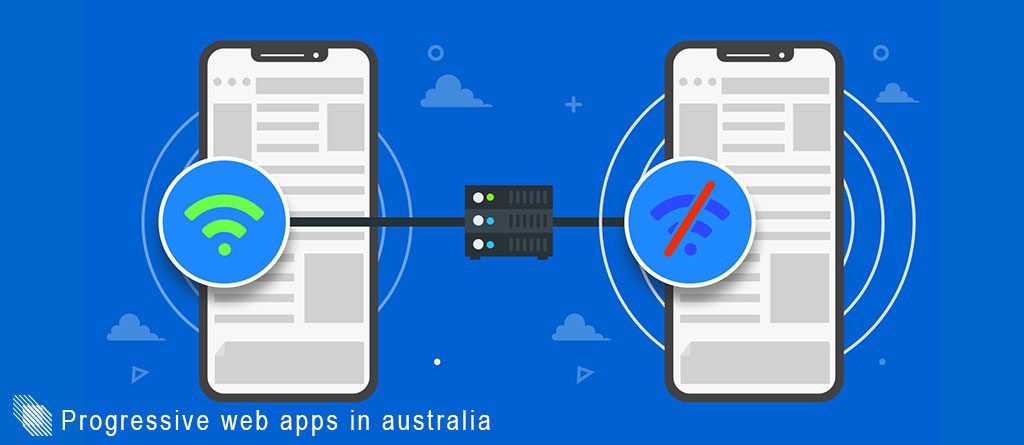
Wikipedia explains that a progressive web app is a web application that loads like a regular websites but can offer the user functionalities such as working offline, push notifications, and device hardware access traditionally available only to native applications. PWAs combine the flexibility of the web with the experience of a native application along with other best practices.They strive to deliver an unsurpassed experience for mobile users. PWAs are reliable and respond more quickly to users. Additionally, they focus on engaging mobile users with a more immersive experience than ever before.
According to Google, a progressive web app should offer the following three things:
Engagement: Apart from engaging content, a progressive web app should allow you to add the app to their home screens. It should also be able to send push notifications to users.
Speed: Speed is an important aspect of progressive web apps. They should load instantly not taking more than three seconds.
Reliability: A progressive web app should be designed to work offline and in areas of low connectivity.
What are the benefits of PWAs?
PWAs are known to offer many benefits to businesses. Let’s take a look at them:
Low data usage: PWAs don’t need too much data to run as compared to native apps. For instance, if a react native app consumes 10-15 MB data, a progressive web app will just need 500 KB or so. Also, they don’t need any significant storage on the device either.
No updates required: PWAs are similar to websites which means they are updated as being used by the user. Unlike native apps, these aren’t updated in the background. The best part is that they can be updated much quicker as no Play or App Store approval is required.
Low costs: Developing a native app for Android and iOS phones is a costly affair for businesses especially for startups. Thus PWAs come across as a wise option for businesses as they reduce the cost of development by 60-70%.
Faster speed: Speed is an essential aspect of progressive web apps making them load almost instantaneously. You can browse, shop, view things in lesser time as it would take on web browsers. Faster speed could lead to higher conversion rates means PWAs make attracting customers easier than ever.
Offline capabilities: Progressive web apps changed the game when they allowed apps to run offline. Offline capabilities allow users to access the app even in low reception areas at faster speed leading to more user engagement and higher conversion rates.
Successful examples of PWAs
Let’s take a look at some big players who switched from their native mobile applications to progressive web applications to rake in huge profits.
Twitter
Twitter is one of the most loved social media apps with over 328 million users with 80% of them accessing it on their mobile phones. That’s why, it launched its PWA in 2018. Twitter Lite is 600 KB in size whereas the native app is around 24 MB. In Twitter Lite, users get web push notifications, Add to Screen prompt, and offline access among other features.
With this, they achieved a:
65% increase in pages per session
20% reduction in bounce rates
75% increase in tweets sent
Pinterest
It took Pinterest 3 months to get their progressive web app ready. The major reason for this switch was that only 1% of their visitors converted to signups.
With this, they achieved:
60% better engagement
Page load time reduced from 23s to 5.6s
44% increase in user-generated ad revenue
Starbucks
It was in 2017 when Starbucks launched its PWA with beautiful graphics and smooth animation. The best part was that users could easily get any information and even customize their order offline as well.
With this, they achieved:
Twice the number of active users
Light-weight app needing just 233 KB of data storage
Flipkart
When India’s largest e-commerce website wanted to provide more seamless experience to users, Flipkart Lite came into being. The PWA requires just 100 KB of data storage which is 300 times smaller than its iOS application.
With this, they achieved:
70% increase in conversions
40% higher engagement
Users spent 3x more time on Flipkart Lite
Trivago
Trivago is a hotel search engine that helps users to find the best deal as per the hotel’s information, pictures, ratings, reviews, and other features. So when the mobile experience caught some fire, it realized the need to introduce its progressive app.
With this, they achieved:
150% increase in engagement
97% increase in clickouts to hotel offers
67% users continue browsing the site when they came online
Lancome
Since launching its PWA, Lancome, a famous cosmetic brand has experienced an upward spiral of profits.
With this, they achieved:
50% increase in the overall speed
17% more conversions
51% increase in mobile sessions
Mobile sales have gone up by 16% year over year
Uber
Uber was in dire need of an application that could be used by anyone regardless of device and network speed. That’s how it came up with its progressive web app that came with its native app in terms of functionalities but came at a significantly lighter weight.
With this, they achieved:
An app that is only 50 KB in size
Super fast speed even on 2G networks
Forbes
Forbes is the latest entrant to join the progressive web app bandwagon. It launched its PWA to re-brand their entire mobile experience.
With this, they achieved:
load-time reducing from 3 seconds to 12 seconds to now 0.8 seconds
100% increase in content engagement
Twice increase in average user session length
43% increase in session per user
20% more impressions
The future of PWAs
PWA is the future of mobile apps that promise better drive revenue, increased user engagement while staying ahead of the competition.At ma systems, our team has experts who have experience in developing native apps, hybrid apps, and progressive web apps. Before we begin progressive web app development, we understand our clients’ business needs as well as their budget and app strategy, based on which we recommend the best framework for developing their app.
Have you got an idea that could other people having better life? Give us a call at enquiries@masystems.com.au.
We are keen to assist you making our world a better place to live!