With Angular JS, it is very important to know well the beginner’s guide for building the web apps. You have generally been heard of the term Backbone.js and Ember.js if you are a professional JavaSript developer. Backbone.js is mainly a JavaScript library with the possession of a RESTful JSON interface whereas Ember.js is particularly an open-source JavaScript framework. One will preferably miss various important features if they are not familiar with the term known as AngularJS yet. These features will probably help in the overall enhancement of your HTML for the web applications. You will find a superheroic taste of the MVW framework of JavaScript or AngularJS with the help of it. So, it is very important to know the overall process of getting started and also to consider its stand-out features. This will help you to choose properly the AngularJS for your upcoming projects. It doesn’t have any such role in developing maintainable as well as well-architectured richweb applications.
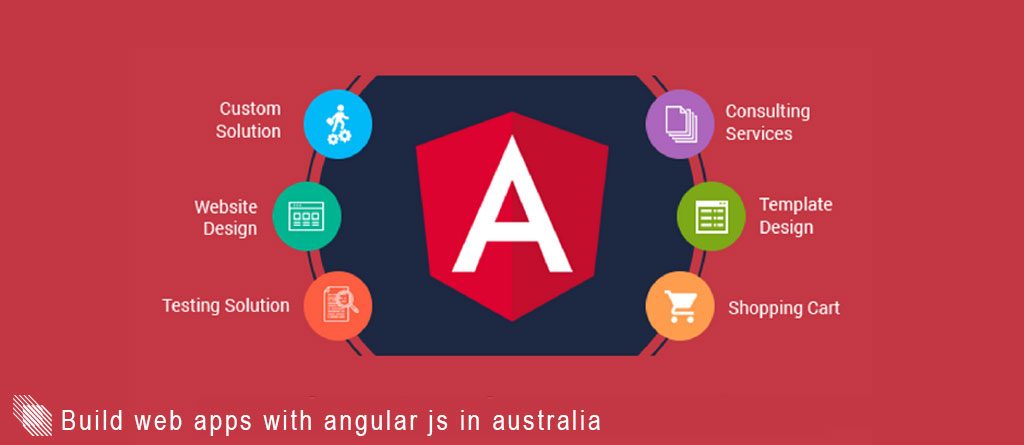
Mainly, AngularJS is an open source web application framework, and also it is built by Google. These are mainly designed for the web developers for making both the testing as well as front-end development easier. To elongate the web applications with the general capability of Model-view-controller (MVC) is mainly considered as the major goal of AngularJS. So, mainly it is a fully extensible client-side JavaScript MVVM or MVC framework. It works great with many other libraries, and so it runs without any library dependencies. Sometimes, it is very important to hire angularjs developer. For fitting your specific needs, you can easily replace its each and every feature and also modify it.
It was Miško Heverym and Adam Abrons (Google engineers of that time) who were mainly involved in developing AngularJS in the year 2009. It is also mentioned on its official website that basically it is a structural framework for the dynamics of web apps. So, it is best fitted for the effective creation of the one-page web applications that mainly require HTML, CSS, and JavaScript on the client side.
It plays a great role in letting you expanding the syntax of HTML and additionally, it also allows you to make the proper use of HTML as your template language. This helps to express the major components of web application both concisely as well as neatly. AngularJS generally makes it very easy to test and also helps you to structure your JavaScript code and that too in a better way.
How To Use AngularJS?
It is quite an easy way to get started with AngularJS. Generally, by putting a few attributes to your HTML scripts, you will only require five minutes to have a simple Angular app. An angular development company can easily make the proper usage of the AngularJS. There are several steps which include:
First of all, you need to include the “ng-app” directive and that too in the <html> tag. It will probably help to define the page properly as an Angular application and helps to make the AngularJS run effectively on the page.
Then, at the page bottom, you should place Angular <script> tag where the <head> tag ends.
After that, it is very important to add regular HTML. The attributes of HTML are mainly used to access the directives of AngularJS. Whereas, the double bracket notation is very useful for the proper evaluation of expressions.
The namespace here is usually defined by the directive ng-controller, and so, for controlling your data, you can easily place your Angular JS. It is also very effective to evaluate the expressions in your HTML. An Angular repeater object is mainly the ng-repeat directive. So, as long as you have all the important tasks to display, the list elements are asked to be created by Angular.
AngularJS is generally considered as a next generation framework as most of the existing frameworks in the recent days are just a bundle of the present tools. There are some very important features which are much more helpful for the developers. These are also equally helpful for the designers.
Not sure what to use? Don’t worry, just flick us an email at enquiries@masystems.com.au and we will assist you make the best decision! Remember our consultation service is absolutely free.
Features Every Mobile Commerce App Needs to Have (part 2)
Building a mobile commerce app design is one of the best ways to drive sales for ecommerce businesses. That’s because mobile apps convert higher than the mobile web.But simply launching an app isn’t enough to make it successful.The best ecommerce app design on the market have certain features in common. These specific elements are all focused on improving the customer experience, driving sales, and increasing conversions.
Whether your app is live or still in the early development stages, adding the right features will lead to prosperity, success, and profitability.After researching the latest mobile commerce trends, mobile commerce tips, and best practices, I’ve identified the top 15 features your m-commerce app must have.
Speedy Checkout Process
Let’s continue talking about your app’s checkout process. In addition to accepting multiple payment methods, the checkout must be as fast as possible.The perfect mobile commerce checkout can be completed in seconds. Users should be able to complete the purchase process in one or two clicks at most.According to Forbes, fewer form fields yield higher conversion rates.
Think about the information you’re asking from your customers. You don’t need to know their favorite color or mother’s maiden name to complete the purchase.Earlier, we talked about the significance of user profiles on a mobile app. This gives you a major advantage over your desktop site or mobile site.
After a customer buys something once, you can store their information for future purchases (with their permission, of course). This can drastically reduce checkout times and yield sky-high conversions.
App users will have the ability to checkout in seconds with just one click.
Product Search
How do users find what they’re looking for on your app?
Some of you might be selling a handful of products, while others are selling hundreds or thousands. No matter how many products you’re offering, the customer needs to find what they’re looking with as little friction as possible.
Just make sure that your app has an advanced search and filter system. These are the biggest pain points associated with retail site search.While this particular study is focused on websites, the same concepts can be applied to mobile commerce apps. If your search isn’t displaying relevant results, it can do more harm than good.With that said, adding search functionality to your mobile app can yield exceptional results.
Conversion rates from users using the search feature are typically two to four times higher compared to those who don’t. Up to 60% of all transactions come from sessions that used the search function.Here’s something else to consider. Take a look at the most popular shopping apps in the market.
Global giants like Amazon and eBay lead the way. What do these apps all have in common? They all have an advanced search and filter function.Even though thousands of products are sold through these apps, customers can still find what they need with a quick search.
Customer Support
No matter how simple your app is, people will always need assistance. Whether it’s questions about particular products, returns, payments, or navigation, you must be available to assist your customers.Don’t look at this as a negative thing.86% of users are willing to pay more for great customer service. Excellent service creates customer loyalty and retention as well.
According to HubSpot, 77% of happy customers share positive brand experiences with other people. Your customer service can ultimately lead to free referrals.With all of this in mind, your app must have features for customer support.
Whether it be live chat, email, ticket support, or phone calls, customer support should be easy to find for all app users.According to VentureBeat, 77% of people between the ages of 18 and 24 use their smartphones to contact customer support. So it’s only natural that your ecommerce mobile app should have support functions built-in.
Retail Integration
This is another feature that’s a must-have for anyone with a physical retail presence.Your app and stores should not be treated as separate entities. Allow each one to compliment the other. This is something that you can’t really accomplish with a desktop site or mobile site.
Studies show that consumers are already using their mobile devices when browsing in physical stores. Take a look at how those devices are being used.Your mobile app can make all of these uses much easier for your customers. Whether this leads to sales through the app itself or at your physical registers, it still benefits your business.
Some shoppers might research products ahead of time on the app, and wait until they see the item in person before making the purchase. Allow app users to create a wish list for this purpose.Other users might do the opposite. They could see an item while browsing in-store, and ultimately decide to purchase it at a later date.
Remember earlier when we talked about using location tracking to improve your app? Retail store integration is another opportunity to leverage this feature.Set up beacons throughout your store to track an app user’s movements. If you see that they spend significant time browsing in a particular aisle, you’ll have a better understanding of their needs.For example, let’s say a user is standing in an aisle for makeup. You can send them a push notification in real-time for a discount on cosmetics.
Mobile Optimized Product Descriptions
Every product on your app must have a description. But these descriptions must be optimized for mobile devices.
Desktop users have the benefit of viewing product descriptions on a 13 or 15-inch screen. But that screen is just four or five inches from the app. So if your product description includes lengthy paragraphs, it will be challenging for users to read.
In a perfect world, your app and ecommerce site will have identical descriptions for products. But consider using an alternate description to shorten things on your mobile app. This mobile commerce tip will yield higher conversions.
I recommend short bullet points that render two lines at most from a mobile device.Analyze your existing product descriptions and determine what can be eliminated to shorten the length.
Mobile Optimized Product Images
Let’s continue discussing the way your products are presented in an app. You must include mobile-optimized images as well.The inability to touch and feel a product is one of the most difficult aspects of making an online purchase. Consumers rely on detailed and accurate photographs to eliminate this barrier.
Research shows that an inaccurate depiction of products is a leading cause of returns.Your app should include as many product images as possible. These must be high-quality and show the product from every angle.If possible, find a way to show the items to scale. Show action shots and people modeling or using the product.For example, let’s say you’re selling a shirt. A person wearing the shirt would provide more value to a customer than a shirt sitting on a table or plain background.According to a case study from CXL Institute, product images with a 360-degree spin feature can boost conversions by up to 27%.
Simple Returns
In a perfect world, all of your customers will be happy with your products. But we both know that’s not the case.Returns are part of running an online retail business. Don’t make this a hassle for your customers.92% of consumers are more likely to buy from a brand again if they experience a simple returns process. 67% of people check a company’s return policy before finalizing a purchase.Furthermore, poor return policies are a leading cause of shopping cart abandonment.
Always offer free returns.
Allow users to facilitate the return process directly through the app. You can take a page from Amazon’s playbook and generate a QR code in the app. That code can be scanned and processed at UPS or FedEx store.You know that returns are bound to happen. Making them easy for app users will keep those customers coming back to make more purchases in the future.
App Analytics
Use app analytics to make continuous improvements in your mobile commerce app. You can track things like:
Product page conversion rates
Most popular payment methods
Section of the screen that’s clicked the most
Geographic location of app users
Types of mobile device being used
Daily app usage per user
Duration of app usage per visit
App crashes
Bugs and error reports
The list goes on and on. This type of information is extremely valuable. You might learn something about the behavior of app users that could trigger a change in your app.Don’t assume that your app is perfect the way it is. There’s a good chance that it’s not. App analytics will help you make significant improvements.
Conclusion
If you have an ecommerce mobile app, you need to add these must-have features if you want it to be successful.All of the information above is based on actual research from high-performing
apps.
Not sure what to use? Don’t worry, just flick us an email at enquiries@masystems.com.au and we will assist you make the best decision! Remember our consultation service is absolutely free.
Building a mobile commerce app design is one of the best ways to drive sales for ecommerce businesses. That’s because mobile apps convert higher than the mobile web.But simply launching an app isn’t enough to make it successful.The best ecommerce app design on the market have certain features in common. These specific elements are all focused on improving the customer experience, driving sales, and increasing conversions.
Whether your app is live or still in the early development stages, adding the right features will lead to prosperity, success, and profitability.After researching the latest mobile commerce trends, mobile commerce tips, and best practices, I’ve identified the top 15 features your m-commerce app must have.Push Notifications
A significant benefit of your mobile commerce apnp is the ability to communicate with app users. You don’t have this advantage with your mobile site or desktop site for that matter, either.When leveraged correctly, sending the right push notification at the perfect time can lead to sales.
Push notifications can be treated like your email marketing campaigns. You can send product updates, discounts, promotions, and other offers as well. Except push notifications should be reserved for your best offers.
If the offer is so good that you’d send a text message to your customers about it (since you basically are), then send it as a push.70% of app users find push notifications useful. 40% of people engage with push notifications within an hour, compared to just 8% who ignore them altogether.Here’s a breakdown of the most desired that content app users want from a push notification:
Promotions — 34%
New developments — 26%
Geotargeted information — 26%
Other — 14%
Running a flash sale? Send a push notification. Are you releasing a product with limited availability? Tell users with a push.Consider using push notifications to update customers about their orders. For example, you can send a “package delivered” message when the order arrives at the front door. 2.Location Tracking
As I briefly mentioned, 26% of app users want push notifications relevant to their locations. Furthermore, 53% of people agree to share their location with mobile apps.Use this crucial data to your advantage to improve your mobile commerce marketing strategy. There are so many different ways to leverage location tracking for mobile apps.Here are a few basic examples to showcase how versatile location tracking can be.
For those of you with physical retail locations, you can have a “store locator” feature within your app. Users can use this to find the closest store to their current position.According to a recent consumer survey, the ability to locate physical stores from an app is one of the most valuable features of a mobile commerce app.In addition to your store location feature, you can use geofencing technology to send relevant push notifications.
If an app user walks by one of your stores, you can immediately send them a push notification enticing them to buy. Even if you don’t have any physical stores, geofencing can still be extremely useful.
Here’s an obvious example to illustrate my point.
Let’s say your business sells sports equipment. If an app user goes to the beach, you can send them an offer related to surfboards and kayaks. If a user goes to a ski resort, you can send offers related to snowboarding and skiing.A person’s physical location can also be used to personalize their app home screen. Customers living in Hobart shouldn’t be seeing the same offers as customers living in Alice Spring.
User Profiles
Allowing users to log in and make purchases from a customer profile is the ultimate advantage of having a mobile commerce app.This feature has countless benefits for you as well as your customers.
For starters, a user profile gives you so much insight into the mind of each customer. You’ll be able to recommend relevant products based on their purchase history and browsing history.Customers are happy because they are getting personalized offers, and you’re pleased because those recommendations will lead to sales.90% of people find personalization appealing.
As you can see, 80% of consumers say they are more likely to do business with brands that offer a personalized experience.Personalization aside, customer profiles make the lives of app users much easier.
Since all of their information is saved to the profile, they can shop and checkout in seconds. Think about how much information is required to complete a transaction. At the bare minimum, you’re asking for things like:
Customer name
Credit card number
Billing address
Shipping address
Email address
Each additional step a customer has to take reduces their chances of converting. From a mobile device, entering all of this information is tedious.However, app users only have to do this once. Then the information can be stored and used for future purchases.
Social Media Integration
74% of shoppers are influenced by social media when it comes to purchasing decisions.I’m assuming (and hoping) that your company already has an active presence on social media. So integrate those channels with your mobile commerce app to get the most out of them.
Here’s why. It’s possible that customers who installed your mobile app do not follow you on social media. Even your top customers won’t be opening your app every day, but it’s likely that they’re using social media daily.Adding your Facebook wall or Instagram feed to your app can encourage users to follow you.
On days when they aren’t shopping on the app, you can still engage with those people via social media.Social media integration also saves you time when it comes to adding content to your app. For example, if you install a YouTube plugin, any video uploaded to your YouTube channel will automatically appear in the app. So you won’t have to upload it twice.
Discounts and Promotions
Everyone loves to feel like they got a great deal when they’re shopping. So give your customers an incentive to use the app by offering exclusive discounts and promotions.According to a recent study, 65% of people use ecommerce apps to receive exclusive deals and offers.
As you can see from the chart, this ranked first on the list of reasons.This feature will obviously have a lot to do with your brand’s overall image and pricing strategy. I know that some luxury brands never offer discounts or anything like that.
But for the majority of you, this feature will be essential for success.I like the idea of using a discount or promotional offer as a way to drive app downloads from the beginning. For example, you could offer $20 off or 20% discount off the first purchase using the app.
But beyond the initial offer, discounts are still a great way to drive mobile commerce sales. This is especially true for time-sensitive offers.Send push notifications for flash sales or deals expiring soon. If you can create FOMO (fear or missing out), it will entice app users to act quickly. People want to get a discount before it’s too late.
Customer Loyalty Program
An app is the perfect platform to facilitate your customer loyalty program.This is a great opportunity for those of you who already have an existing loyalty program, as well as brands starting one from scratch. A mobile commerce app makes it easier for customers to track their loyalty status through their user profile.
There are lots of different ways to promote customer loyalty. All of which entice consumer spending.You can reward customers based on purchase frequency, total spending, or a combination of the two.
What makes a loyalty program better on an app? Take a look at the results of this recent study by CodeBroker.The vast majority of consumers are more likely to participate in loyalty programs if they can easily access information from their smartphones. Nothing makes this easier than a mobile app.
Mobile ecommerce loyalty programs address other customer wants and needs that we previously discussed as well. Earlier, we learned that the number one reason why consumers use ecommerce apps is to receive exclusive deals and promotions.A customer loyalty program delivers exactly what those individuals want.’
Lots of Payment Options
Let me take a moment to paint a picture for you.Imagine that a customer just got acquainted with your brand. Maybe they stumbled upon a social media advertisement or heard a friend’s recommendation. The customer visits your website, learns about your app’s first purchase promotion, and decides to download it.
With the app installed on their device, the user browses for products and adds a few items to their shopping cart. Time to checkout, right?As the user continues through the purchase process, they quickly discover that you don’t accept their preferred payment method. The user abandons the cart, and you probably lost them forever.
Don’t let this happen to you. Think about how much work that user just went through and how disappointed they were when they couldn’t complete the order.You can’t assume that everyone wants to pay with a Visa or Mastercard. Even if the customer owns one of those cards, they might get better rewards or benefits by using an alternative method.
Every ecommerce mobile app should accept:
All major credit cards (Visa, Mastercard, Discover, American Express)
Debit cards
PayPal
Apple Pay
Google Pay
Venmo
We haven’t quite reached the point where you need to accept cryptocurrencies, but that might change within the next five or ten years.
Not sure what to use? Don’t worry, just flick us an email at enquiries@masystems.com.au and we will assist you make the best decision! Remember our consultation service is absolutely free.
There’s been a tough competition between mobile apps and the mobile web since the early days.Countless articles have been written, videos have been made, experts have given seminars & lectures – in which some favored the former while others recommended the latter.Although, we almost forgot that some other trends were also getting popular. Progressive Web Apps are one of them.
Bringing together the best of both the mobile and the web world, this technology is the talk of the town these days. People are talking about it and even the topmost mobile app developmentcompanies in Singapore, UK, and the US are expressing interest.Seeing this, you might be interested in knowing more about Progressive Web Apps and might want to ask a couple of questions like:
What are Progressive Web Apps?
Google’s Developer page describes progressive web apps as user experiences that have the reach of the web and are more fast, engaging, and reliable.
Although if you’re looking for a more specific solution, here it is:
Next-gen apps that combine the benefits of a website with mobile apps, hence resulting in more optimal and better user experience.
Why choose them over native apps?
Well, there are heaps of reasons that explain why Progressive web apps are a better option over native apps. Here are some of them:
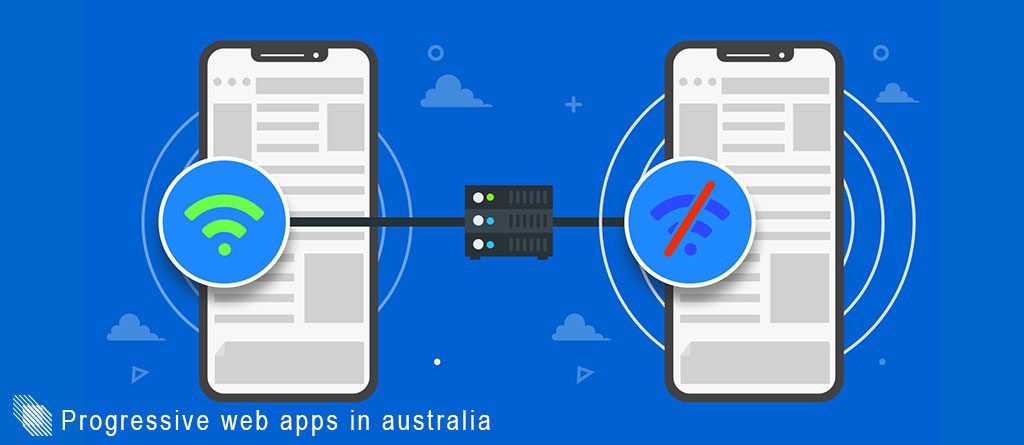
They can be accessed Offline
Progressive web apps solve the biggest problem people face, i.e. the need for an Internet connection. Sometimes it’s not possible to access the Internet. As a result, accessing certain mobile apps becomes difficult.
Although, similar is not the case with progressive web apps. You can use them offline as well without any interruption even in areas where there is no sufficient network.
They’re fast and dynamic
As Progressive web apps run in a browser and the content & media files are served by dynamic servers using simple HTML, CSS, javascript files, they work quickly.
You don’t even need to worry about the app screen sizes. They change as per the device and platform.
You can run them on any platform
Yet another major advantage progressive web apps have over native apps is that you can run them on any platform, be it web, Android, or iOS. This way you can reach a larger audience.
You don’t even need to install them
Even the apps with very small size take at least a few minutes to install. This causes a problem if you need an app urgently. At that time, you can’t do anything but wait.Progressive web apps effectively solve this problem. You don’t even need to install them. Just click on the link and the app will open in front of you.
Easily Shareable
It’s very easy to share Progressive web apps. Just send the link to the person who you want to send the app and he can access it on just a click. Isn’t that cool?Hoping that by now you might’ve gotten a better insight, why progressive web apps are a better alternative to native mobile apps. Still, if you’ve any queries, feel free to contact us. We’ll be pleased to help.
Not sure what to use? Don’t worry, just flick us an email at enquiries@masystems.com.au and we will assist you make the best decision! Remember our consultation service is absolutely free.
Smartphones and, more recently, tablets are increasingly becoming the computer of choice for more and more people. Mobile app developers have specialized training in design for small electronic equipment, and write computer programs for smartphones and other mobile devices.
Instead of building for a larger PC screen, these developers are dealing with extremely small Android, iPhone, or BlackBerry screens. They are experienced in multi-media applications and multiple mobile computer programming languages.
Mobile app developers typically write programs using either objective C, C++, Python, or Java. Each mobile device uses a specific programming language which app developers must understand.
Android Developers
Android is the name of the mobile operating system owned by Google. Android typically comes installed on a variety of smartphones and tablets from many manufacturers such as Samsung, Sony, and Motorola (as well as on Google’s own Nexus smartphone), giving users access to Google services such as Search, YouTube, Maps, Gmail, etc.
An android developer develops applications for use on phones and tablets that utilize the android operating system – everything from interactive games to media players, to electronic book readers and global navigation software. The code required for android development is mostly open source and available freely for anyone interested in developing apps for use with the Android OS.
It’s an exciting time to have a career in Android development. There is a healthy supply of jobs, demand for Android apps is accelerating, and technology is advancing.
iOS Developers
iOS is a shortened way of saying ‘iPhone OS’, or ‘iPhone Operating System’, and is the mobile operating system that runs on Apple’s mobile devices such as iPhones and iPads.iOS developers build software – they know how to structure it, test it, debug it, and how to use source control. iOS developers know Swift or Objective-C (and some know both languages, which is best).
They know iOS, which means they have a good grasp on build views; can handle user interaction; can display data; show alerts; handle navigation; display images, labels and text views; and integrate with REST APIs and parse JSON.
Trends come and go so frequently in the tech world that it’s hard to foresee the next big thing in technology. However, one thing that is definitely here to stay is the progressive web appphenomena.You may not have heard of them yet, but progressive web apps (PWAs) have already started making waves. So what are progressive web apps exactly?
Wikipedia explains that a progressive web app is a web application that loads like a regular websites but can offer the user functionalities such as working offline, push notifications, and device hardware access traditionally available only to native applications. PWAs combine the flexibility of the web with the experience of a native application along with other best practices.They strive to deliver an unsurpassed experience for mobile users. PWAs are reliable and respond more quickly to users. Additionally, they focus on engaging mobile users with a more immersive experience than ever before.
According to Google, a progressive web app should offer the following three things:
Engagement: Apart from engaging content, a progressive web app should allow you to add the app to their home screens. It should also be able to send push notifications to users.
Speed: Speed is an important aspect of progressive web apps. They should load instantly not taking more than three seconds.
Reliability: A progressive web app should be designed to work offline and in areas of low connectivity.
What are the benefits of PWAs?
PWAs are known to offer many benefits to businesses. Let’s take a look at them:
Low data usage: PWAs don’t need too much data to run as compared to native apps. For instance, if a react native app consumes 10-15 MB data, a progressive web app will just need 500 KB or so. Also, they don’t need any significant storage on the device either.
No updates required: PWAs are similar to websites which means they are updated as being used by the user. Unlike native apps, these aren’t updated in the background. The best part is that they can be updated much quicker as no Play or App Store approval is required.
Low costs: Developing a native app for Android and iOS phones is a costly affair for businesses especially for startups. Thus PWAs come across as a wise option for businesses as they reduce the cost of development by 60-70%.
Faster speed: Speed is an essential aspect of progressive web apps making them load almost instantaneously. You can browse, shop, view things in lesser time as it would take on web browsers. Faster speed could lead to higher conversion rates means PWAs make attracting customers easier than ever.
Offline capabilities: Progressive web apps changed the game when they allowed apps to run offline. Offline capabilities allow users to access the app even in low reception areas at faster speed leading to more user engagement and higher conversion rates.
Successful examples of PWAs
Let’s take a look at some big players who switched from their native mobile applications to progressive web applications to rake in huge profits.
Twitter
Twitter is one of the most loved social media apps with over 328 million users with 80% of them accessing it on their mobile phones. That’s why, it launched its PWA in 2018. Twitter Lite is 600 KB in size whereas the native app is around 24 MB. In Twitter Lite, users get web push notifications, Add to Screen prompt, and offline access among other features.
With this, they achieved a:
65% increase in pages per session
20% reduction in bounce rates
75% increase in tweets sent
Pinterest
It took Pinterest 3 months to get their progressive web app ready. The major reason for this switch was that only 1% of their visitors converted to signups.
With this, they achieved:
60% better engagement
Page load time reduced from 23s to 5.6s
44% increase in user-generated ad revenue
Starbucks
It was in 2017 when Starbucks launched its PWA with beautiful graphics and smooth animation. The best part was that users could easily get any information and even customize their order offline as well.
With this, they achieved:
Twice the number of active users
Light-weight app needing just 233 KB of data storage
Flipkart
When India’s largest e-commerce website wanted to provide more seamless experience to users, Flipkart Lite came into being. The PWA requires just 100 KB of data storage which is 300 times smaller than its iOS application.
With this, they achieved:
70% increase in conversions
40% higher engagement
Users spent 3x more time on Flipkart Lite
Trivago
Trivago is a hotel search engine that helps users to find the best deal as per the hotel’s information, pictures, ratings, reviews, and other features. So when the mobile experience caught some fire, it realized the need to introduce its progressive app.
With this, they achieved:
150% increase in engagement
97% increase in clickouts to hotel offers
67% users continue browsing the site when they came online
Lancome
Since launching its PWA, Lancome, a famous cosmetic brand has experienced an upward spiral of profits.
With this, they achieved:
50% increase in the overall speed
17% more conversions
51% increase in mobile sessions
Mobile sales have gone up by 16% year over year
Uber
Uber was in dire need of an application that could be used by anyone regardless of device and network speed. That’s how it came up with its progressive web app that came with its native app in terms of functionalities but came at a significantly lighter weight.
With this, they achieved:
An app that is only 50 KB in size
Super fast speed even on 2G networks
Forbes
Forbes is the latest entrant to join the progressive web app bandwagon. It launched its PWA to re-brand their entire mobile experience.
With this, they achieved:
load-time reducing from 3 seconds to 12 seconds to now 0.8 seconds
100% increase in content engagement
Twice increase in average user session length
43% increase in session per user
20% more impressions
The future of PWAs
PWA is the future of mobile apps that promise better drive revenue, increased user engagement while staying ahead of the competition.At ma systems, our team has experts who have experience in developing native apps, hybrid apps, and progressive web apps. Before we begin progressive web app development, we understand our clients’ business needs as well as their budget and app strategy, based on which we recommend the best framework for developing their app.
Have you got an idea that could other people having better life? Give us a call at enquiries@masystems.com.au.
We are keen to assist you making our world a better place to live!
Shopping app development is gaining popularity day by day. No wonder, after all, according to Visa, in 2017 almost half of the consumers have opted for online purchases in the New Year season, and a third of these purchases were made through mobile devices.
Over the past year, smartphone users have spent 52% more time to buy various products via trading applications (compared to last year). And this indicator is going to grow even more, as US m-commerce forecast shows. So, it’s high time to think about how to create an online shopping app and make it profitable and successful.
Flurry Analytics Experts have found that demand for applications for purchases is increasing at an incredible rate, and more than a quarter of shoppers start searching for the product they need in the application right away, without even visiting a website first.
You can say that applications are becoming a kind of “middle way” between online and offline shopping. They allow customers to learn about current offers and discounts, make purchases online or determine the best time to go to the store.So, owners of online (and real) stores can and should build a shopping app, that is – offer their clients one more tool for buying goods and services.
Types of stores for mobile commerce
Usually, online shopping applications are selling such good as:
clothes
cosmetics
products and beverages, especially exclusive ones
sporting goods
medications
kitchen appliances
housewares
computer hardware and home appliances of any kind
Although this is a very short list, obviously you can expand it with any other kinds of goods or services.In fact, it does not matter what you sell, in any case, you can think about how to create a mobile shopping app.But before moving on to the heart of the matter, let’s see if the game is worth the candle.
Why is the app for shopping so efficient?
As you’ve already understood, today a significant percentage of users regularly make purchases through mobile devices. Therefore, shopping app development will bring you:
Increased sales and growth of the audience. Shopping applications are created primarily to improve the sales curve. Special built-in marketing features allow increasing the number of customers very quickly.
Customer loyalty. If you create a shopping app, you will get an additional competitive advantage. Your typical customer definitely has a smartphone, and he is actively using it. So, by offering to install a mobile app, you make the life of your clients easier and better. In addition, you can take advantage of information about user behavior in your app so that you will be able to provide a customer with individual bonuses, discounts, recommendations. All this leads to rising the loyalty factor.
New sales. If you find out how to make an app like Amazon (or a better one), then the clients will undoubtedly appreciate all the benefits of mobile collaboration with you. And the first successful purchase will lead to the second, third, and, in the end, turn the casual buyer into a regular customer.
Expansion of interaction with the client. The chance of leaving a review, getting an invitation to an event, being the first one to know about the arrival of a new product is something that your customer will like and enjoy. So mobile shopping service will help you to engage the audience in much closer interaction.
Optimization of internal business processes. Besides, you should build a shopping app to manage your company more efficiently (and at a lower cost). Believe us, if there is an application at hand, the task of managing and controlling becomes so much easier.
Successful applications for m-commerce are constantly supporting the desire of users to search for products and make purchases at any time and in any place. Studying the audience behavior, the stores stimulate curiosity and interest of their customers, prompting them to open the app again and again.
Still in doubt, whether you should order online shopping app development? Well, we are ready to argue our position even more strongly.
Again, reasons to create a shopping app…
There are 4 main arguments that will convince retailers to find out how to make an app like Amazon, and get the cherished places on the AppStore and Google Play:
According to Google study, more than 80% of online mobile purchases are triggered by the spontaneous impulse. And such an impulse is a powerful stimulus that influences all areas of our life including this one.
Your customers love mobile applications because these services make shopping more interesting, easier and more interactive.
Shopping app development is a service available almost to everyone. Many small companies mistakenly believe that only the largest corporations can make a shopping app. In fact, the cost of the app creation is quite comparable to the cost of developing a perfectly good website. However, we will discuss the price issue later.
Your competitors are also on their guard. After all, you are not the only one who knows about the demand for mobile applications.
Perhaps, the competition issue should be considered in more detail. In the end, it’s useful to know your enemy.
Shopping app features
To build a shopping app that users will like and enjoy, you need to know what they expect from mobile services in the retail sector. The following statistics give some idea about this issue.
Many believe that the mobile application must necessarily be as creative as possible. Of course, uniqueness is always important, but the usability is a much more significant factor. And this usability is provided by the correct functionality of the application.
There are several “classic” features that you can take advantage of during online shopping app development.
User registration
Undoubtedly, this is really a “must-have” feature. Be sure to give the user the opportunity to sign up in various ways: through a phone number, social networks, email…
A helpful tip: let the customer, if desired, make a purchase without registration, this will expand your audience. To persuade a person to become a registered user, try to give convincing reasons (for example, a system of bonuses and discounts).
Catalog
You cannot make a shopping app without this feature which goes second on the list of importance (the first one is registration).
There are two types of people: some come to the store for choice, others look for something specific. To meet the needs of both, you need to create a searchable catalog. This catalog should colorfully present the whole range of your products and provide the possibility to find the goods according to the given characteristics (for instance, color, size, collection).
Purchase online
It is impossible to create a shopping app without allowing users to buy online. But, doing so, don’t forget to take into account the specifics of your business niche.
For example, sometimes it is important to see the product before buying it, so if you have goods delivery points, your application must include a map of their location. In addition, in the shopping app development process, try to make a purchase system as simple (for a user) as possible. Otherwise, why should a customer download your mobile service?
In particular, you can simplify the purchase process by binding a bank card to the application: the shopper selects the goods, clicks the “Buy” button and confirms the purchase with the code.
However, this approach has its own pitfalls: cases of fraud, alas, are not uncommon, and people don’t trust their data to mobile devices. Therefore, it is worthwhile to seriously consider security issue and develop a reliable authorization system.
A shopping basket
Of course, you cannot build a shopping app and forget about implementing this feature. What should a shopping basket be like? Here are its important characteristics:
an intuitive interface (do not force the user to think about what exactly he should do to place an order or add goods);
the ability to add and remove items to the basket;
calculation of purchase price.
Search bar
How to make an app like Amazon?… first of all, follow the example of this popular service and offer a convenient search for the desired product, with a filtration and sorting system.
Wishlist
Not all stores sell online, but this does not mean that they should abandon shopping app development. In this case, you can provide such a feature as Wishlist, its purpose is to shorten the customer service time by facilitating the buyer’s choice.
The mobile app can serve as a user assistant in the selection of goods, allow creating lists of desired purchases (so-called wishlists) and making pre-orders. Then the client should go to your store and pick up his order without the hassle. This simplifies the customer service and thus saves time both for clients and your staff.
System of recommendations
If you want to know how to make an app like Amazon, this feature is just what you need. As we have already explained to you, the Amazon application has won the sympathy of users, among other things, thanks to the system of recommended purchases.
The principle is simple: by analyzing the user’s behavior, you can understand his needs and suggest a product that can interest him – something that he is likely to buy. For example, you can offer products similar to those ones that he has already bought or viewed.
Customer Support
If you want to build a shopping app that will attract users, you need to think about bonuses for them. There are heaps of ideas of the sort: layaway programs, the chance to ask a question to the consultant, leave feedback, get a discount, etc.
And you can think over a special loyalty system for the users of the application – for example, a good discount for those who order products through your mobile service.
Online Chat
This feature will allow a potential buyer to ask you a question online, any time he wants. This is beneficial to both parties of the shopping process since many customers prefer to communicate with online consultants instead of dealing with real ones.
To implement this features during online shopping app development, you can use the chatbot system. This means that the questions will be answered by the program (at least initially, and your manager can join the conversation later if there is such a need). This is convenient because a number of clients use applications during off-hours when managers are usually no longer available.
Scanning codes
This feature allows using barcode scanning to find out prices and information about products. The user won’t have to spend time on asking sellers or searching for help.
Search for the nearest store
If you decided to create a shopping app, then you want to make the purchase process much easier for customers. In that case, the feature that allows finding the nearest outlet is necessary – of course, if you have the chain store system.
Instructions and useful materials
This feature is especially important if you are selling complex or specific products. Then the mobile application becomes, among other things, a kind of manual.
Push Notifications
It’s not enough to make a shopping app. Moreover, it is not enough to convince the user to install it… it is also important to remind him of your mobile store from time to time. Notifications serve this purpose quite well.
However, to make sure that these reminders aren’t distracting the users’ attention from your services, you need to notify only about important marketing promotions, discounts, and activities on interests (for example, an exhibition of new products, etc.).
Interactive Elements
Even if the main purpose of this mobile service is to stimulate demand and build a sales channel, it is quite possible to supplement the online shopping app development with interactive elements.
For example, appreciate our interactive version of the product presentation:
This shopping animation conceptis bright and simple at the same time, right?
Shipping system
Of course, you can create a shopping app where the customer will be asked to make pre-order and pick up the goods in the store itself. This is useful in cases when the product should be preliminarily studied, examined in detail. However, it is much more reasonable to provide a reliable shipping system. A good option is to establish cooperation with one of the many third-party delivery services.
Customer Feedback
Reading negative reviews is unpleasant, but it helps to fix the situation and solve the problem that your buyer might have experienced. As statistics show the implementation of this feedback feature increases sales by 15-20%.
How to create a mobile shopping app?
We hope we convinced you, and you decided to build a shopping app. What are your actions then (apart from finding the right experts)?
Market analysis and collection of requirements
It is unreasonable to begin the process of shopping app development without analyzing the demand and supply rate. In other words, you need to conduct market research.
Objectives:
your competitors (not only world-scale but also local ones): who they are and what they offer;
consumers’ expectations. What user problems can you solve if you create a shopping app?
Features Set
Understanding the market requirements, you can figure out what your application should be like, what you can offer the consumer. Based on this information, you must compile a list of the features of your mobile store.
Specifications & prototype
This stage of online shopping app development implies the coordination of your requirements with an expert company. It is important to make up a technical project and create the prototype which includes the wireframes of each app screen.
Application Design
If you come up with how to create an online shopping app that is visually appealing, you can assume that you’ve made a first step to the future incomes.The successful design for the shopping app includes a stylish logo, a user-friendly basket and a brightly illustrated catalog of products.And it is very important that your application be as easy to use as possible. The fewer actions required for ordering, the better.
For example, take a look at the design examples for shopping applications that our UI/UX experts have developed:This shopping app design concept is very informative and appealing.And this design idea is just perfect for e-commerce purposes. Actually, as well as the following one:
The right choice of the platform
To make a shopping app of the highest quality, you need to choose the right application platform. So, it is necessary to understand which audience you are targeting at and what is the level of your ambitions.
The audience is the owners of iPhones and iPads. Firstly, these are people who value brand image, and sometimes they are even ready to buy an expensive device on credit. Secondly, these are wealthy individuals who attach importance to the status and security of data, as well as to good quality.
The rules for publishing applications in the App Store are tougher than in Google Play. It takes a lot of time and effort before the application is available for users.
If you want to build a shopping app for self-confident people who are striving to make a strong impression on others, then choose the iOS platform.
Mobile devices on the Android operating system are being produced by a large number of companies: Samsung, Lenovo, Sony, LG, Philips, Asus, Huawei… The price range for these smartphones is wide, from the cheapest ones to the most expensive models.
It can not be said that Android is a budget device. But at the same time, if you need to reach an audience with medium and low incomes, then Android should be on your list necessarily.
The main difficulty of shopping app development for Android is its advantage, namely – a wide range of mobile devices. This means that you need more time to test the application and modify it.
If you want to create a shopping app for people of average income who are less prone to fashion trends, the Android platform is what you are looking for.Together, iOS and Android cover about 90% of mobile device users. And this implies that the best option is to make a shopping app for both platforms.If your goal is also to attract fans of Windows Phone (the former Nokia), then in addition to the two popular platforms, order the online shopping app development for Windows.
Shopping app development and testing
Of course, this is the key point of the whole process. And now you definitely can not do without the help of professional experts.
Suppose you decided to build a shopping app for all platforms… what should you do next?
It all depends on your budget. Shopping app development can be carried out in parallel or in two or three stages, that is, for each platform separately. Choose the audience that is the most loyal and profitable for you, and start with a platform that is close to these people (for example, Android). Then, when time and money allow, create a shopping app for iOS.
This option stretches the overall online shopping app development time, but it brings closer the release date of the first application version.
And, of course, you should not forget about testing your mobile service. Some people who are willing to make a shopping app want to save at this stage, which is certainly a mistake. Such an approach can lead to the fact that your application will fail, and instead of the QA engineer, the user will find a malfunction… And this will have a bad effect on the user experience.
Launching the app and publishing on the App Store and Google Play
This is the final stage of the shopping app development process, but it is also very important. First, the application must fully meet all the requirements of AppStore and Google Play. Secondly, you need to make sure that your service somehow stands out among its like. An attractive logo and skillful description of the benefits of your mobile store will help achieve your goal.
Arguably, mobile app developers are the heart of web app development companies. The work they do is both challenging and taxing. They use programming languages and development skills to create, test and develop mobile applications. Not just their hands and mind are always busy but they also need to keep their focus intact all the time.
That is why, I have made a list of the 10 best tools for mobile app developers to work faster, easier, and more efficiently. You can use these tools whether you work solo or with a team – in-house or remote. I hope you find the peace of mind that you’re looking for and stay organized with the following tools.
Xamarin is the most preferred mobile app development tool for native applications. It enables you to use the existing data access and business logic layers across different platforms. The tool can be used for developing all kinds of apps for all major mobile platforms including iOS, Android, and Windows.
Features:
C# programming language with .NET language infrastructure
Allows communication with the API of mobile devices
Xamarin Component Store includes UI controls, cross-platform libraries, and third-party libraries
mobile app developer with Appcelerator
As the name suggests, the tool helps you accelerate the app development process enabling you to create apps with fewer lines of code. This app development tool supports iOS, Android, Windows, and browser-based HTML5 applications.
Features:
Applies the universal concept of “write once, use anywhere”
The quickest way to build app prototypes
ArrowDB, its data store lets you deploy data models without hassles
mobile app developer PhoneGap
PhoneGap is an open-source free to use mobile app development tool used for developing a single app that works on all mobile devices. It integrates various libraries with existing functions and code enhancing the entire app development process and making it faster.
Features:
Works well on JavaScript, HTML5,and CSS3
Comes with a plug-in architecture to increase its functionality
Code reusability across iOS, Android, Windows Phone, BlackBerry, Firefox OS
mobile app developer with Sencha
Sencha is a favorite online tool of many developers for designing, developing and testing enterprise mobile applications. It comes packed with 115+ high-performance, pre-tested, and integrated UI components to give multiple options to choose from and work with.
Features:
Lets you code in HTML5 format using Sencha touch software development kit
Includes calendar, grids, charts, and more.
Supports Android, iOS, BlackBerry, Windows Phone, and more
mobile app developer withMobile Roadie
Mobile Roadie is a popular custom app development tool that makes it easy for developers to create and manage their apps for Android and iOS platforms.
Features:
Lets you send geo-targeted push notifications, set up geo-fences, create custom interactive maps
Deeply integrated user community features
Includes features such as auto-updating fan wall, auto-importing of RSS, and Google News or Twitter keywords integration
mobile app developer with AppMachine
AppMachine is a highly efficient app development tool that enables people to build web apps as well as native apps for iOS, Android, and Windows Mobile platforms. It comes with a user-friendly app builder and multilingual interface.
Features:
Comes in a four-column layout with an options panel on the top
Gives a preview of the app in different platforms in real-time
Easy to use
mobile app developer with Good Barber
The name might be a little quirky but its features are on point. Good Barber is a popular native app builder tool that uses the latest app development technologies to create robust and highly functional apps.
Features:
Lets you create an app without actually coding
Offers features like authentication, beacons, geofencing, service worker, etc
Easy integration with Google Play and App Store
The app creation process is translated into 28 languages from beginning to end
mobile app developer with The AppBuilder
The App Builder is a flexible suite of Enterprise Application Development specializing in corporate employee mobile apps and enterprise mobile app platforms. The best part is that you don’t need to possess technical skills to create a robust app on this tool, it’s super-easy to use.
Features:
Comes with an online toolkit along with a training module
Lets you segment your audience by location, job function, project or any criteria you need
Allows you to update your app’s structure, content and linked services anytime – even after the app has gone live
mobile app developer with Kony AppPlatform
It is a low-code platform for omni-channel app development. Mobile app developers prefer it over other tools as it accelerates development, shortens testing, simplifies changes, streamlines support and reduces maintenance.
Features:
No code to full code development
The single code base for omni-channel output
Robust HA/DR and performance SLAs
mobile app developer with LongRange
LongRange is a native mobile app development tool that lets you write once and deploy to Apple, Android, and Windows devices easily.
Features:
Build native mobile apps using only RPG/ CL with DDS
Utilize mobile device features like GPS, camera, audio, SMS, etc.
Automatically push app updates into the mobile devices
Not sure what to use? Don’t worry, just flick us an email at enquiries@masystems.com.au and we will assist you make the best decision! Remember our consultation service is absolutely free.