There’s been a tough competition between mobile apps and the mobile web since the early days.Countless articles have been written, videos have been made, experts have given seminars & lectures – in which some favored the former while others recommended the latter.Although, we almost forgot that some other trends were also getting popular. Progressive Web Apps are one of them.
Bringing together the best of both the mobile and the web world, this technology is the talk of the town these days. People are talking about it and even the topmost mobile app developmentcompanies in Singapore, UK, and the US are expressing interest.Seeing this, you might be interested in knowing more about Progressive Web Apps and might want to ask a couple of questions like:
What are Progressive Web Apps?
Google’s Developer page describes progressive web apps as user experiences that have the reach of the web and are more fast, engaging, and reliable.
Although if you’re looking for a more specific solution, here it is:
Next-gen apps that combine the benefits of a website with mobile apps, hence resulting in more optimal and better user experience.
Why choose them over native apps?
Well, there are heaps of reasons that explain why Progressive web apps are a better option over native apps. Here are some of them:
They can be accessed Offline
Progressive web apps solve the biggest problem people face, i.e. the need for an Internet connection. Sometimes it’s not possible to access the Internet. As a result, accessing certain mobile apps becomes difficult.
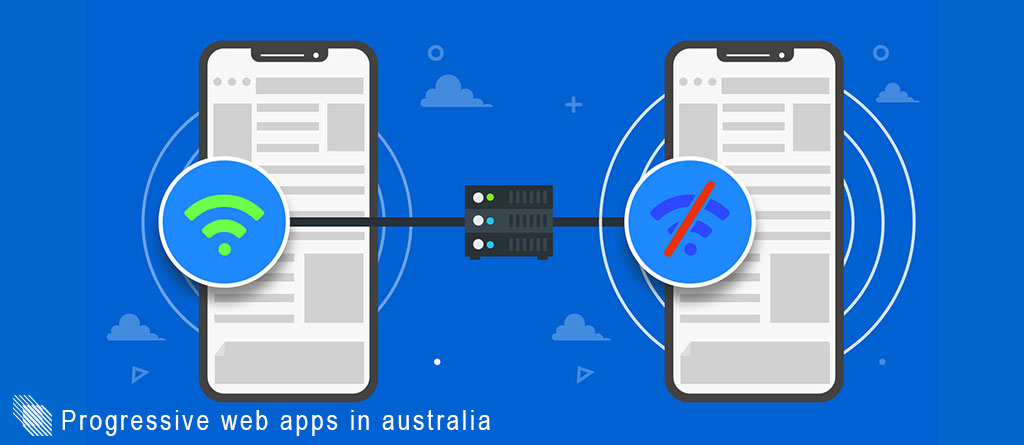
Although, similar is not the case with progressive web apps. You can use them offline as well without any interruption even in areas where there is no sufficient network.
They’re fast and dynamic
As Progressive web apps run in a browser and the content & media files are served by dynamic servers using simple HTML, CSS, javascript files, they work quickly.
You don’t even need to worry about the app screen sizes. They change as per the device and platform.
You can run them on any platform
Yet another major advantage progressive web apps have over native apps is that you can run them on any platform, be it web, Android, or iOS. This way you can reach a larger audience.
You don’t even need to install them
Even the apps with very small size take at least a few minutes to install. This causes a problem if you need an app urgently. At that time, you can’t do anything but wait.Progressive web apps effectively solve this problem. You don’t even need to install them. Just click on the link and the app will open in front of you.
Easily Shareable
It’s very easy to share Progressive web apps. Just send the link to the person who you want to send the app and he can access it on just a click. Isn’t that cool?Hoping that by now you might’ve gotten a better insight, why progressive web apps are a better alternative to native mobile apps. Still, if you’ve any queries, feel free to contact us. We’ll be pleased to help.
Not sure what to use? Don’t worry, just flick us an email at enquiries@masystems.com.au and we will assist you make the best decision! Remember our consultation service is absolutely free.
Trends come and go so frequently in the tech world that it’s hard to foresee the next big thing in technology. However, one thing that is definitely here to stay is the progressive web appphenomena.You may not have heard of them yet, but progressive web apps (PWAs) have already started making waves. So what are progressive web apps exactly?
Wikipedia explains that a progressive web app is a web application that loads like a regular websites but can offer the user functionalities such as working offline, push notifications, and device hardware access traditionally available only to native applications. PWAs combine the flexibility of the web with the experience of a native application along with other best practices.They strive to deliver an unsurpassed experience for mobile users. PWAs are reliable and respond more quickly to users. Additionally, they focus on engaging mobile users with a more immersive experience than ever before.
According to Google, a progressive web app should offer the following three things:
Engagement: Apart from engaging content, a progressive web app should allow you to add the app to their home screens. It should also be able to send push notifications to users.
Speed: Speed is an important aspect of progressive web apps. They should load instantly not taking more than three seconds.
Reliability: A progressive web app should be designed to work offline and in areas of low connectivity.
What are the benefits of PWAs?
PWAs are known to offer many benefits to businesses. Let’s take a look at them:
Low data usage: PWAs don’t need too much data to run as compared to native apps. For instance, if a react native app consumes 10-15 MB data, a progressive web app will just need 500 KB or so. Also, they don’t need any significant storage on the device either.
No updates required: PWAs are similar to websites which means they are updated as being used by the user. Unlike native apps, these aren’t updated in the background. The best part is that they can be updated much quicker as no Play or App Store approval is required.
Low costs: Developing a native app for Android and iOS phones is a costly affair for businesses especially for startups. Thus PWAs come across as a wise option for businesses as they reduce the cost of development by 60-70%.
Faster speed: Speed is an essential aspect of progressive web apps making them load almost instantaneously. You can browse, shop, view things in lesser time as it would take on web browsers. Faster speed could lead to higher conversion rates means PWAs make attracting customers easier than ever.
Offline capabilities: Progressive web apps changed the game when they allowed apps to run offline. Offline capabilities allow users to access the app even in low reception areas at faster speed leading to more user engagement and higher conversion rates.
Successful examples of PWAs
Let’s take a look at some big players who switched from their native mobile applications to progressive web applications to rake in huge profits.
Twitter
Twitter is one of the most loved social media apps with over 328 million users with 80% of them accessing it on their mobile phones. That’s why, it launched its PWA in 2018. Twitter Lite is 600 KB in size whereas the native app is around 24 MB. In Twitter Lite, users get web push notifications, Add to Screen prompt, and offline access among other features.
With this, they achieved a:
65% increase in pages per session
20% reduction in bounce rates
75% increase in tweets sent
Pinterest
It took Pinterest 3 months to get their progressive web app ready. The major reason for this switch was that only 1% of their visitors converted to signups.
With this, they achieved:
60% better engagement
Page load time reduced from 23s to 5.6s
44% increase in user-generated ad revenue
Starbucks
It was in 2017 when Starbucks launched its PWA with beautiful graphics and smooth animation. The best part was that users could easily get any information and even customize their order offline as well.
With this, they achieved:
Twice the number of active users
Light-weight app needing just 233 KB of data storage
Flipkart
When India’s largest e-commerce website wanted to provide more seamless experience to users, Flipkart Lite came into being. The PWA requires just 100 KB of data storage which is 300 times smaller than its iOS application.
With this, they achieved:
70% increase in conversions
40% higher engagement
Users spent 3x more time on Flipkart Lite
Trivago
Trivago is a hotel search engine that helps users to find the best deal as per the hotel’s information, pictures, ratings, reviews, and other features. So when the mobile experience caught some fire, it realized the need to introduce its progressive app.
With this, they achieved:
150% increase in engagement
97% increase in clickouts to hotel offers
67% users continue browsing the site when they came online
Lancome
Since launching its PWA, Lancome, a famous cosmetic brand has experienced an upward spiral of profits.
With this, they achieved:
50% increase in the overall speed
17% more conversions
51% increase in mobile sessions
Mobile sales have gone up by 16% year over year
Uber
Uber was in dire need of an application that could be used by anyone regardless of device and network speed. That’s how it came up with its progressive web app that came with its native app in terms of functionalities but came at a significantly lighter weight.
With this, they achieved:
An app that is only 50 KB in size
Super fast speed even on 2G networks
Forbes
Forbes is the latest entrant to join the progressive web app bandwagon. It launched its PWA to re-brand their entire mobile experience.
With this, they achieved:
load-time reducing from 3 seconds to 12 seconds to now 0.8 seconds
100% increase in content engagement
Twice increase in average user session length
43% increase in session per user
20% more impressions
The future of PWAs
PWA is the future of mobile apps that promise better drive revenue, increased user engagement while staying ahead of the competition.At ma systems, our team has experts who have experience in developing native apps, hybrid apps, and progressive web apps. Before we begin progressive web app development, we understand our clients’ business needs as well as their budget and app strategy, based on which we recommend the best framework for developing their app.
Have you got an idea that could other people having better life? Give us a call at enquiries@masystems.com.au.
We are keen to assist you making our world a better place to live!
 What are Progressive Web Apps?